The building
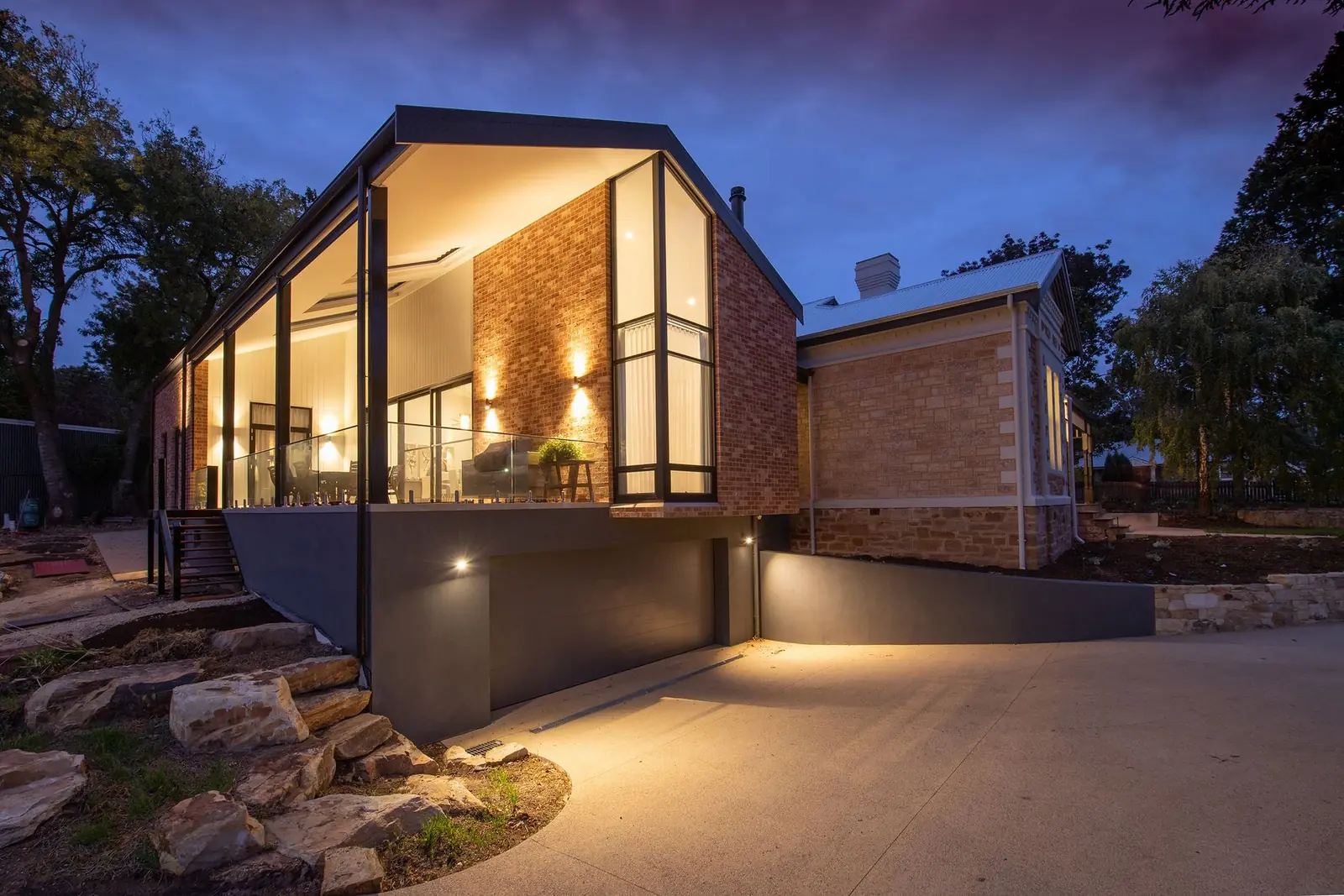
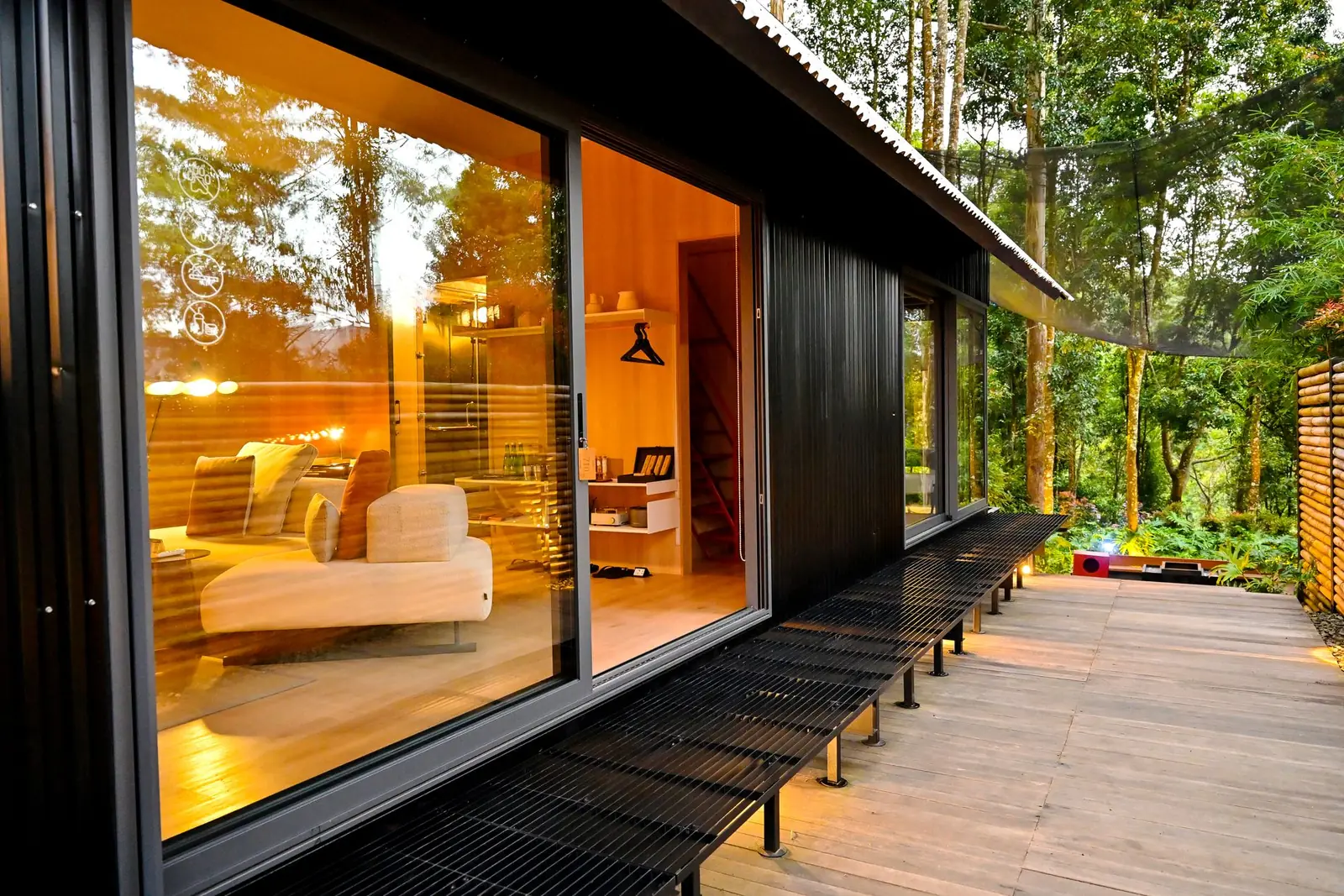
Light coming out through the glass does most of the work before a single fitting goes in the garden. Then a wash on the front, and something on the reveal so the shape reads at night.
Home · After dark
Garden lighting · Warwickshire & the West Midlands
A garden room gets most of its use after dark, so the lighting gets drawn at the same time as the planting. Scroll down and watch one garden go from afternoon to evening.
Scroll slowly
It's one photograph. As you scroll, the sun goes down behind the hedge and the lights come up in the order a real scheme gets switched on: the glass, the terrace, the festoons, the path, then the borders.
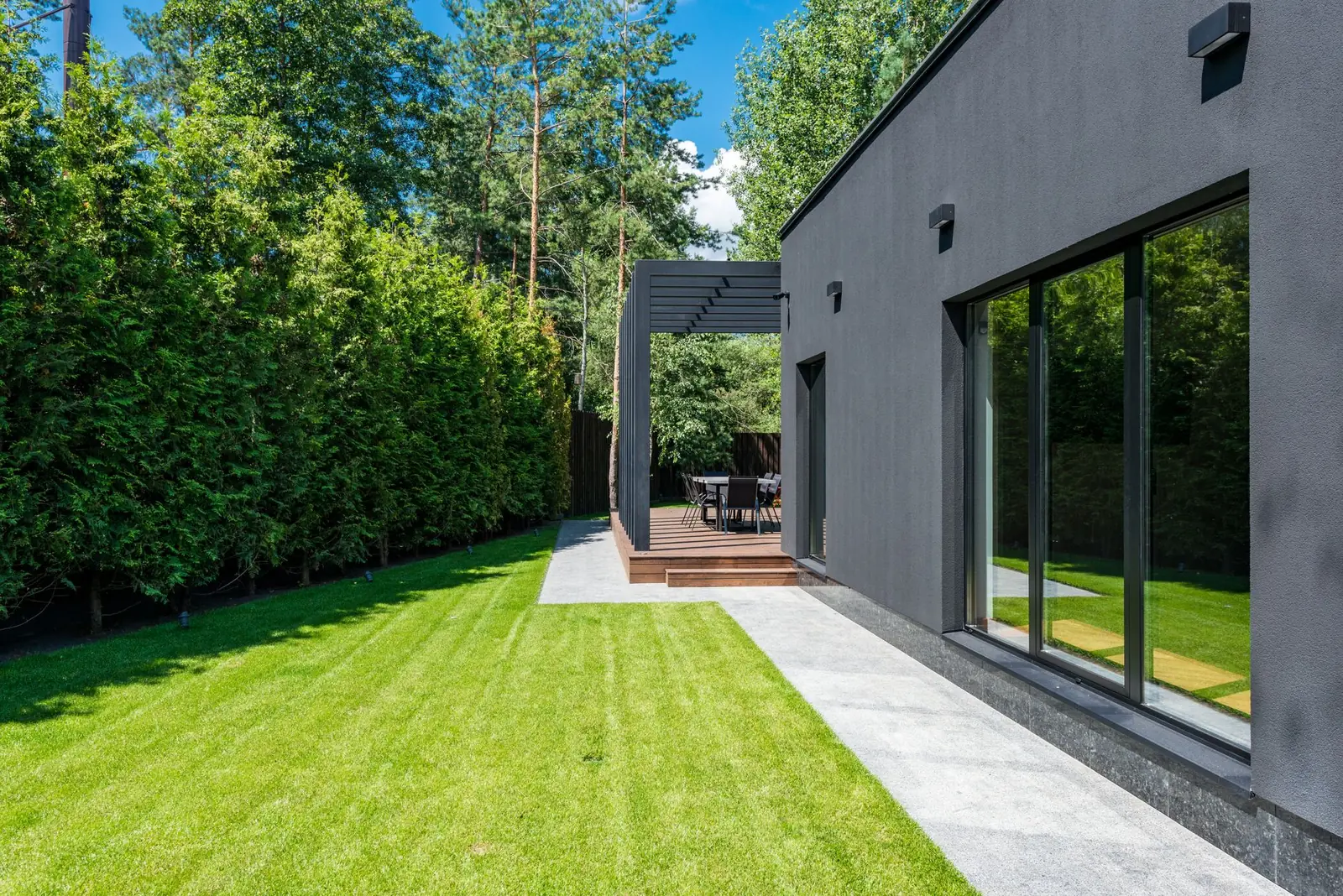
Nothing in that garden is bright on its own. Most of the light comes out through the glass, and the rest is eight or ten small fittings on three circuits, aimed at things worth looking at.
What you just watched
Light coming out through the glass does most of the work before a single fitting goes in the garden. Then a wash on the front, and something on the reveal so the shape reads at night.
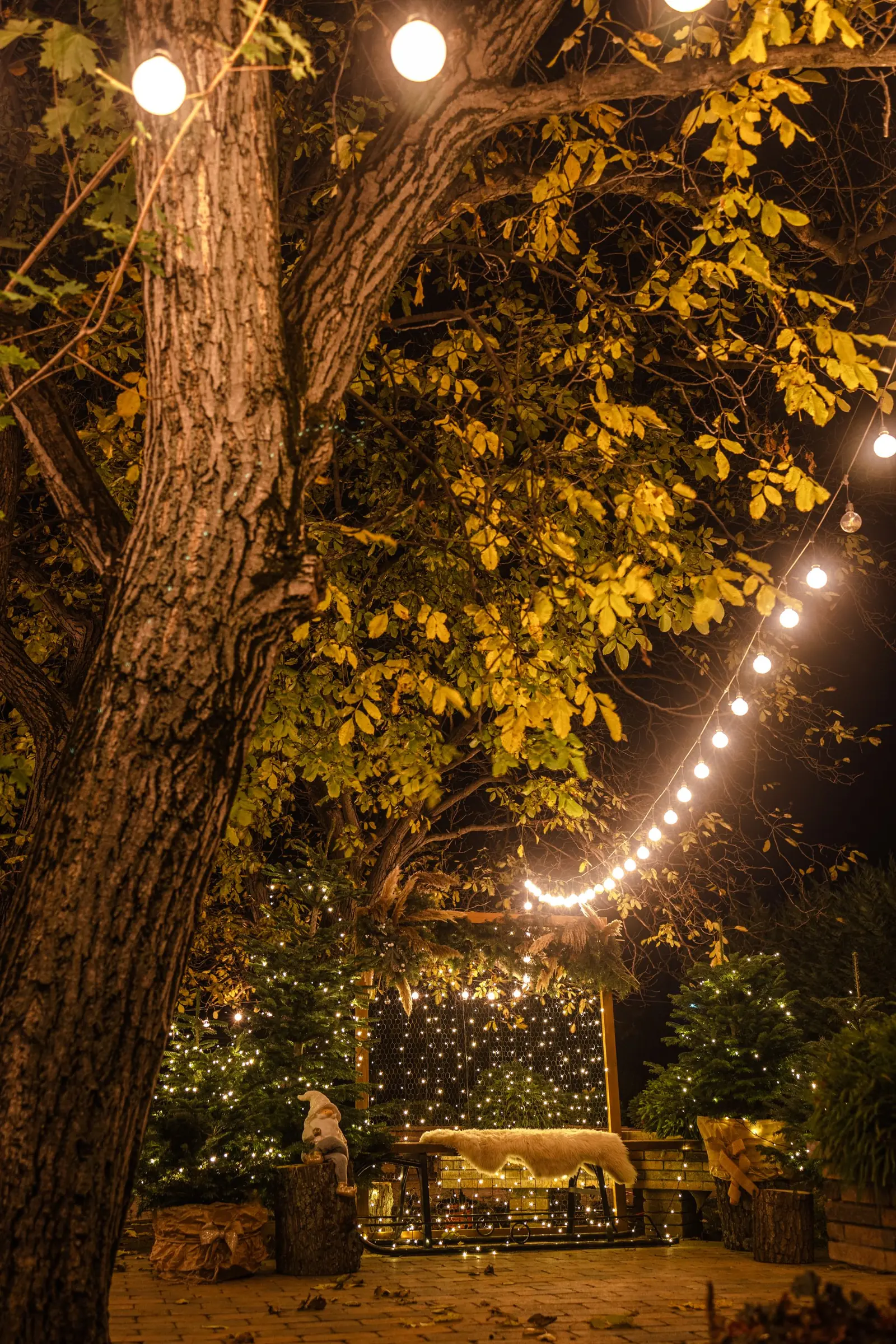
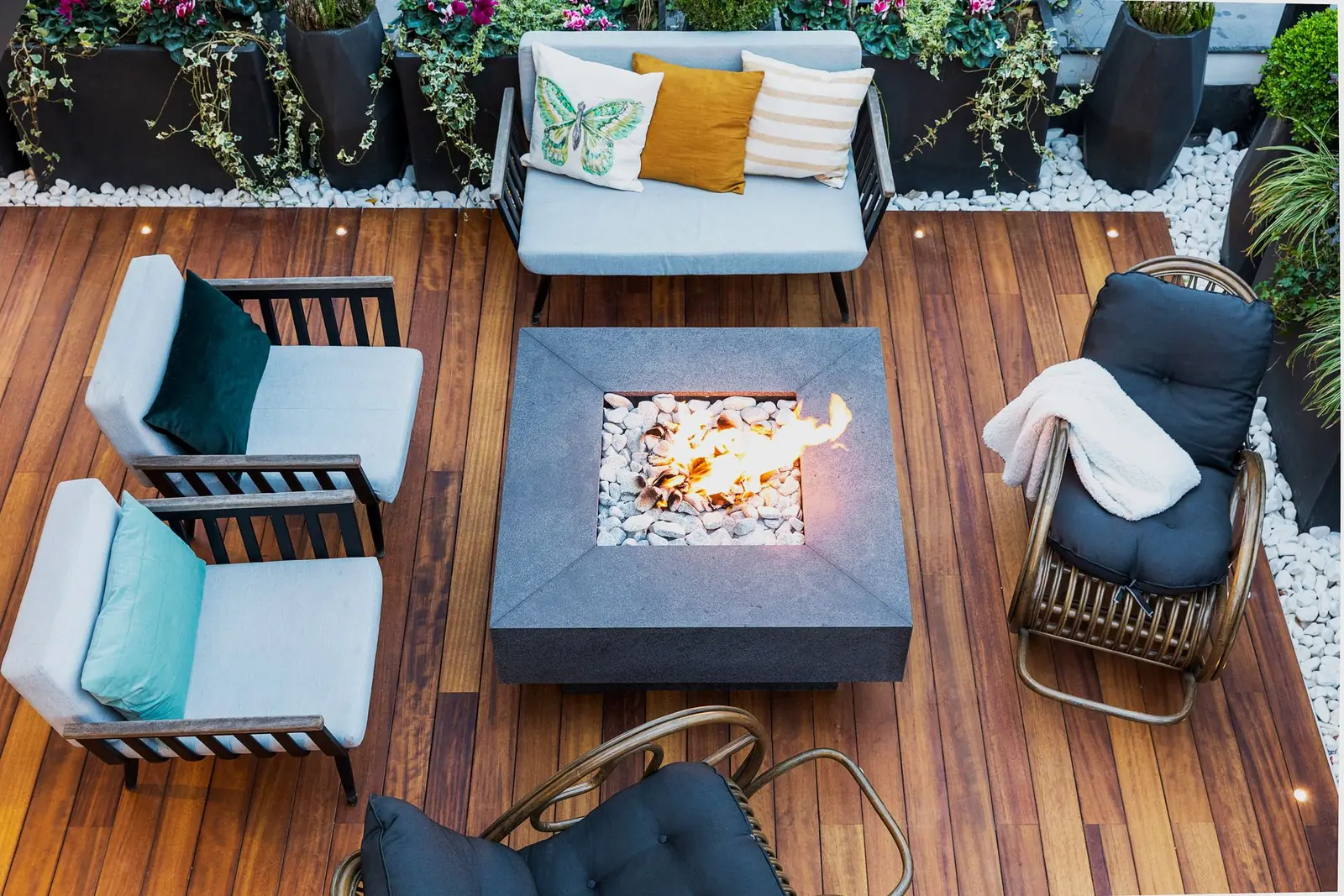
Wherever people actually sit. Low, warm, under things rather than over them, and never a downlight on the middle of a table.
Fixed, tensioned on a wire and run to a switch indoors, not a plug in the shed. They give the garden a ceiling.
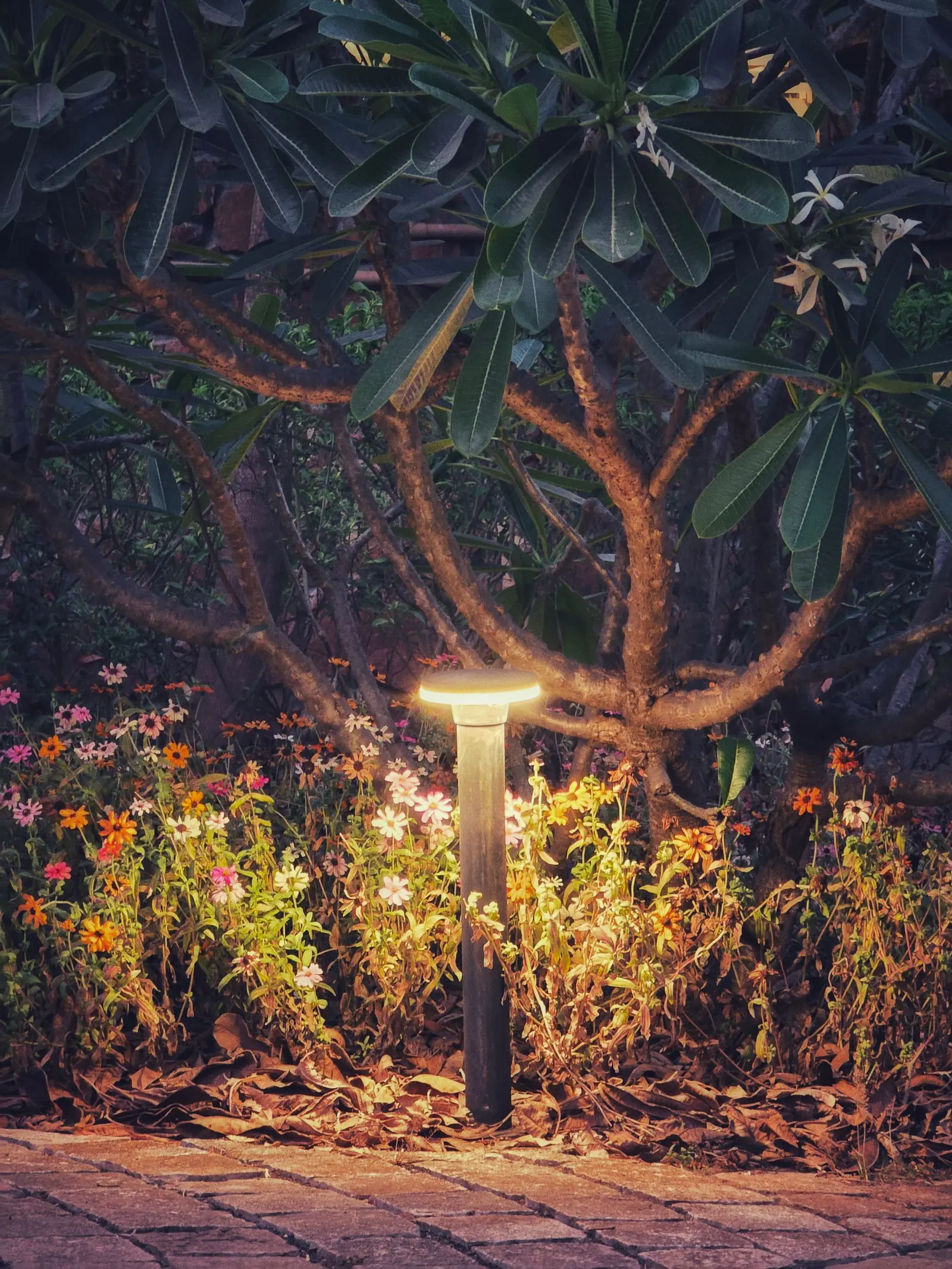
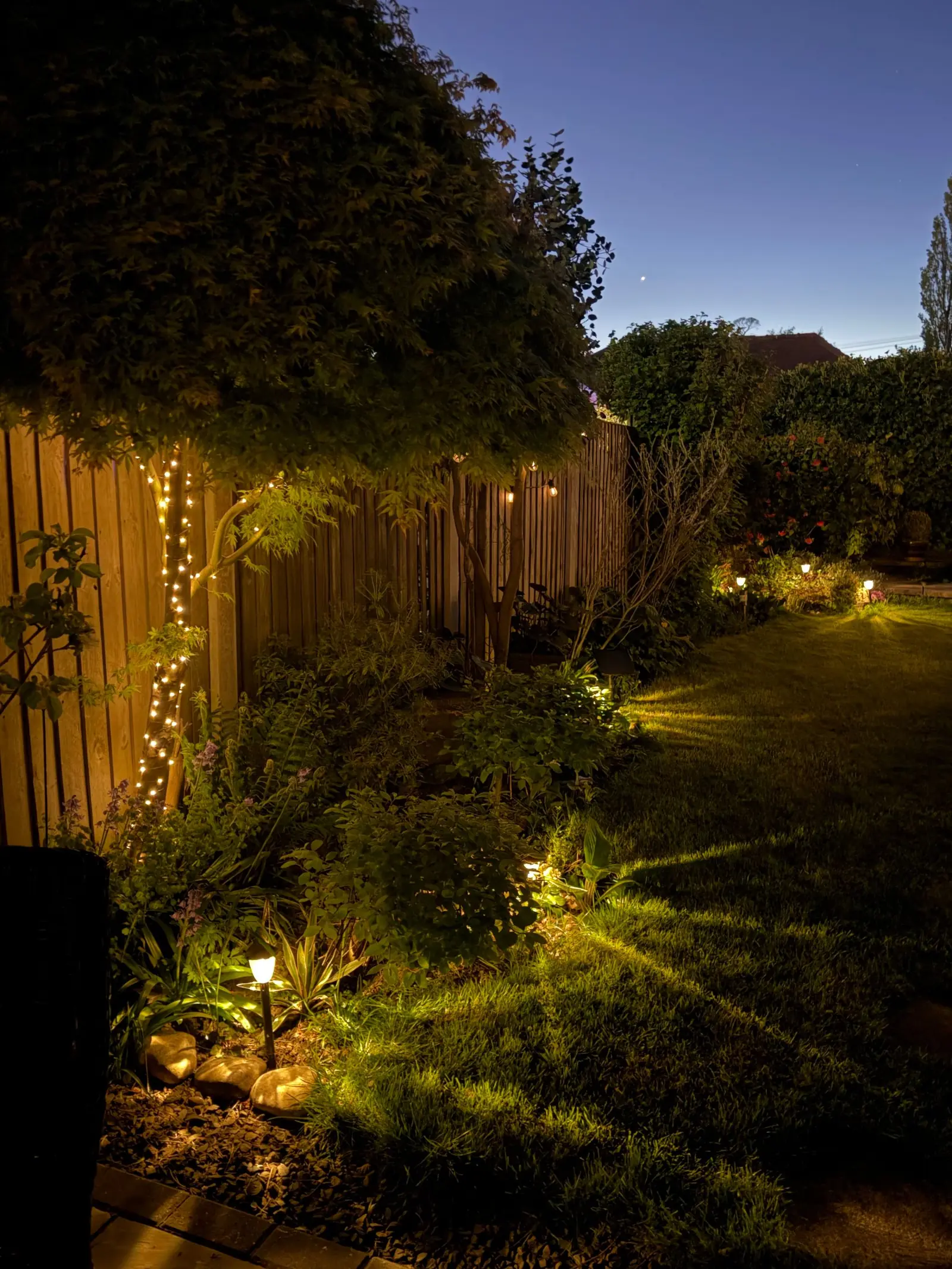
Path lights so you can get down the garden in February without a torch. Low enough not to dazzle, and always on the steps.
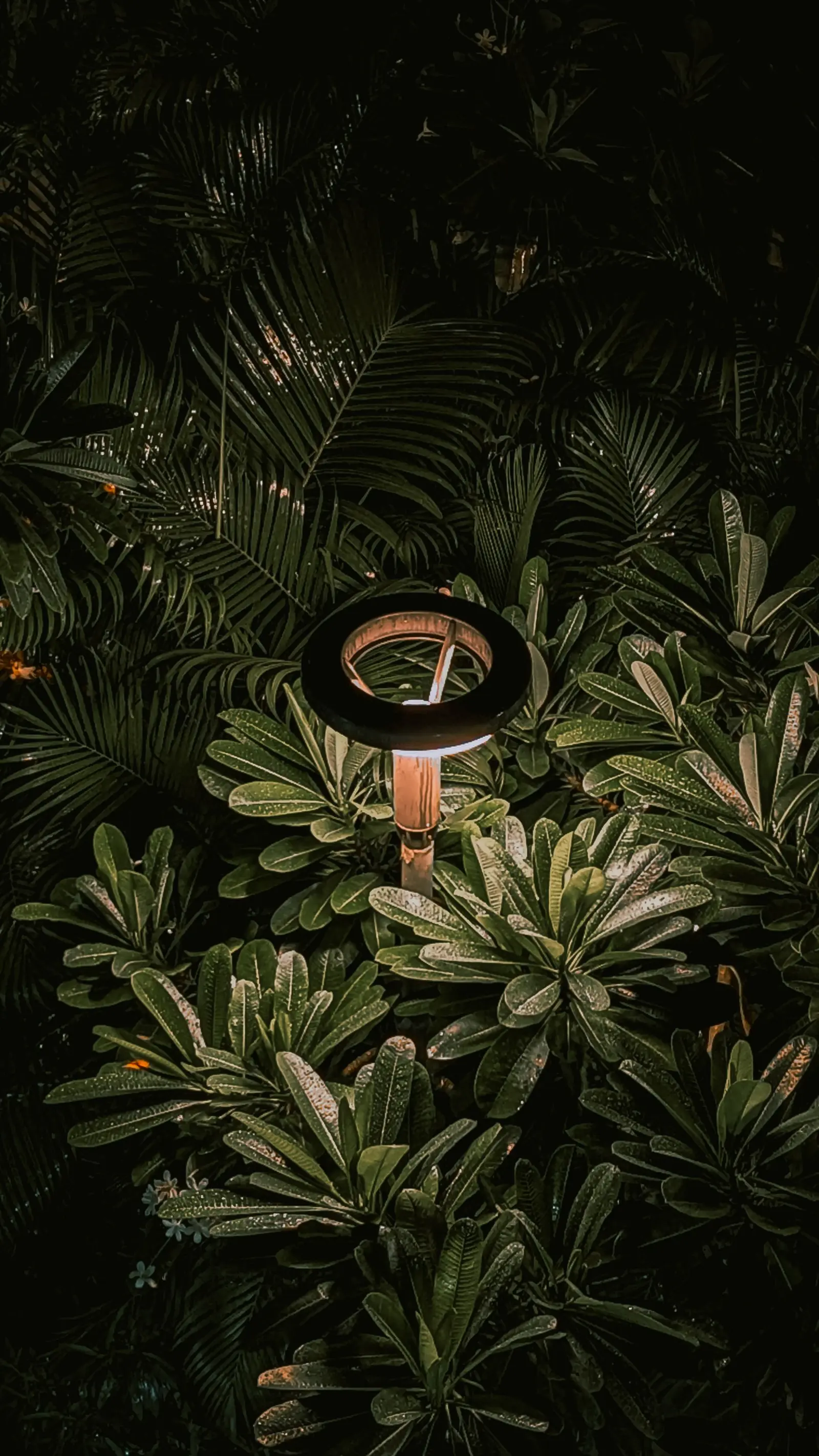
Last, once everything else is settled. Uplights into a multi-stem tree, a wash through a hedge, a spike behind the grasses so the shadow does the work.
The bit that sounds backwards
A garden lit everywhere has nowhere to look. Your eye needs somewhere to rest, and the dark bits are what make the lit bits read as light.
Warm colour too, the colour a lamp is indoors, so the garden matches what's coming through the kitchen window. And nothing pointed at a neighbour's window.
The practical half
Cable runs with the groundworks, under the paths and beds before they are finished. Retro-fitting a planted garden means lifting things you have just paid for.
A transformer sits in the building or near the house and the garden runs off that. Anything on mains is done and certified by a qualified electrician.
Terrace, path and planting on separate switches, so you can have some of it without all of it. That is what gets a scheme used on a Tuesday.
Before you ring
Including the one where nothing needs building at all.
Yes, and plenty of our lighting work is exactly that. It is slower and more careful than doing it with the groundworks, because the cable has to get under an established garden without wrecking it.
It should not, and if it does it has been designed badly. Garden lighting sits low and points at things inside your garden. A single security floodlight causes far more arguments than a whole designed scheme.
Domestic garden lighting normally does not. Listed buildings and conservation areas are the exception, and we check yours before anything is fixed to anything.
Yes, and it is a sensible way to do it. Get the cable and the transformer in with capacity to spare, then add fittings as the garden grows in.
Next step
Lighting gets aimed in the dark, so the second half of every lighting visit happens after sunset. Book the first half, and we'll arrange the evening.