
Dementia care
Fourteen places on one floor. A settled day, the same faces on shift, and a secure garden to walk in when the walking starts.
Most people find this page after a bad few months. Someone has been up at three in the morning, or has got lost on a road they've walked for forty years, or has started asking where their mother is. By the time a family rings us they're usually exhausted and feeling like they've failed. They haven't.
Here is what we do, in enough detail to compare us with other homes.
How we work
The same faces
We have eleven people in the care team and we don't use agency staff except in an emergency. Someone with dementia can't learn a new face every week. This is the single most expensive thing we do and the one we'd cut last.
A day with a shape
Meals at the same times, in the same seat, with the same view. Routine removes about thirty small decisions a day that have quietly become hard to make.
Somewhere to walk
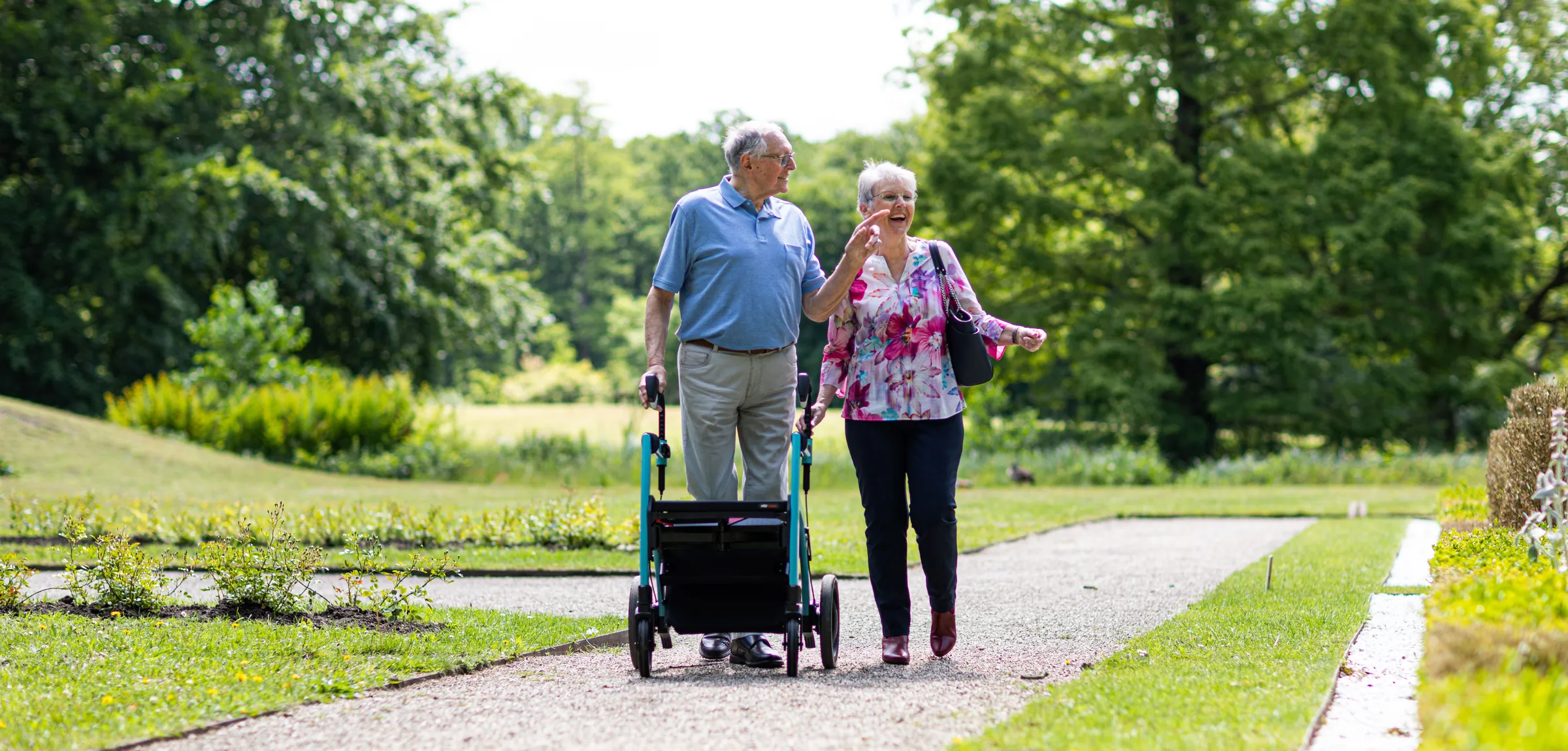
A secure garden with a level path that loops, no dead ends and no gate to rattle. Walking is usually the body saying it wants to be somewhere else. It's easier to let someone walk than to keep asking them to sit.
Stepping into it
If someone tells you their husband is coming at six, arguing helps nobody. Our staff are trained to go with it and steer gently, and Priya is better at it than anyone Donna has worked with.
Doors you can find
A memory box beside each bedroom door with a few of that person's own things in it. It sounds like a small thing. It's the difference between finding your room and standing in a corridor.
Everyone, not just carers
The kitchen and housekeeping staff do the dementia training too, because the person who brings the tea has as many conversations in a day as anyone wearing a uniform.


What we can't do
We're a residential home. We don't have registered nurses on our staff, so if someone needs nursing care, or is at a stage where they need two people and a hoist for every move, we're the wrong place and we'll say so at the assessment rather than six weeks in.
We also can't take someone whose distress regularly puts other residents at risk. That's not a judgement about the person. It's 34 people in one building and we have to be straight about what that means.
If we do have to say no, we'll tell you which homes nearby we'd send our own family to. We'd rather do that than take a placement we can't hold.
Questions families ask.
Will she know I've gone?
Often yes, at first, and the first fortnight is usually the hardest part of the whole thing. Most people settle. Some ask to go home for months. We'll tell you the truth about how she's been rather than the version that makes the visit easier, because you'll work it out anyway and then you won't trust us.
Should I visit less at the start?
People will tell you to stay away for two weeks. We don't say that, because it's your mother and a fortnight is a long time. Come when you want to. We'll tell you if a particular time of day is going badly, and often that's teatime rather than the visit itself.
What if she gets worse?
We review needs every six months and any time something changes. If the fee needs to move inside the range we'll sit down with you first. If we reach a point where we genuinely can't meet the need, we'll say so early and help you find somewhere that can, with as much notice as we can manage.
Can she bring her own furniture?
Please do. Her chair, her pictures, her bedding, the lamp she's had for thirty years. Rooms that look like the person came with them settle faster than rooms that look like we furnished them. We'll help carry it in.
Do you take people with a DoLS in place?
Yes, and we'll handle the paperwork with the council. If you've not come across a Deprivation of Liberty Safeguard before, it sounds alarming and mostly isn't. Donna will walk you through what it means in about ten minutes at the assessment.
Dementia care is £1,190 to £1,390 a week.
Standard rooms start at £1,190. A larger or garden room runs to £1,390. Where you land depends on how much help someone needs, and we put the exact figure in writing after the assessment.
One thing worth knowing
Dementia care costs more than residential care everywhere, and it's fair to ask why. It's staffing. More people on shift, more of them awake at night, and more time per resident during the parts of the day that are hard. That's the whole of the difference.
Come at three in the afternoon.
Mid-afternoon is the hardest part of the day on a dementia floor, so it's the best time to see how a home copes. Come then if you can.
Or ring and ask for Donna. 0116 496 0742